
Project Overview
Marathwada is one of India's most drought-prone regions. Nearly 30% of its agricultural land is degraded, and climate-change-induced extreme weather destroyed nearly 20% of all crops in India between 2016 and 2024. For smallholder farmers here — many growing cotton and sorghum on thin, depleted soils — the arithmetic of farming has become brutal.
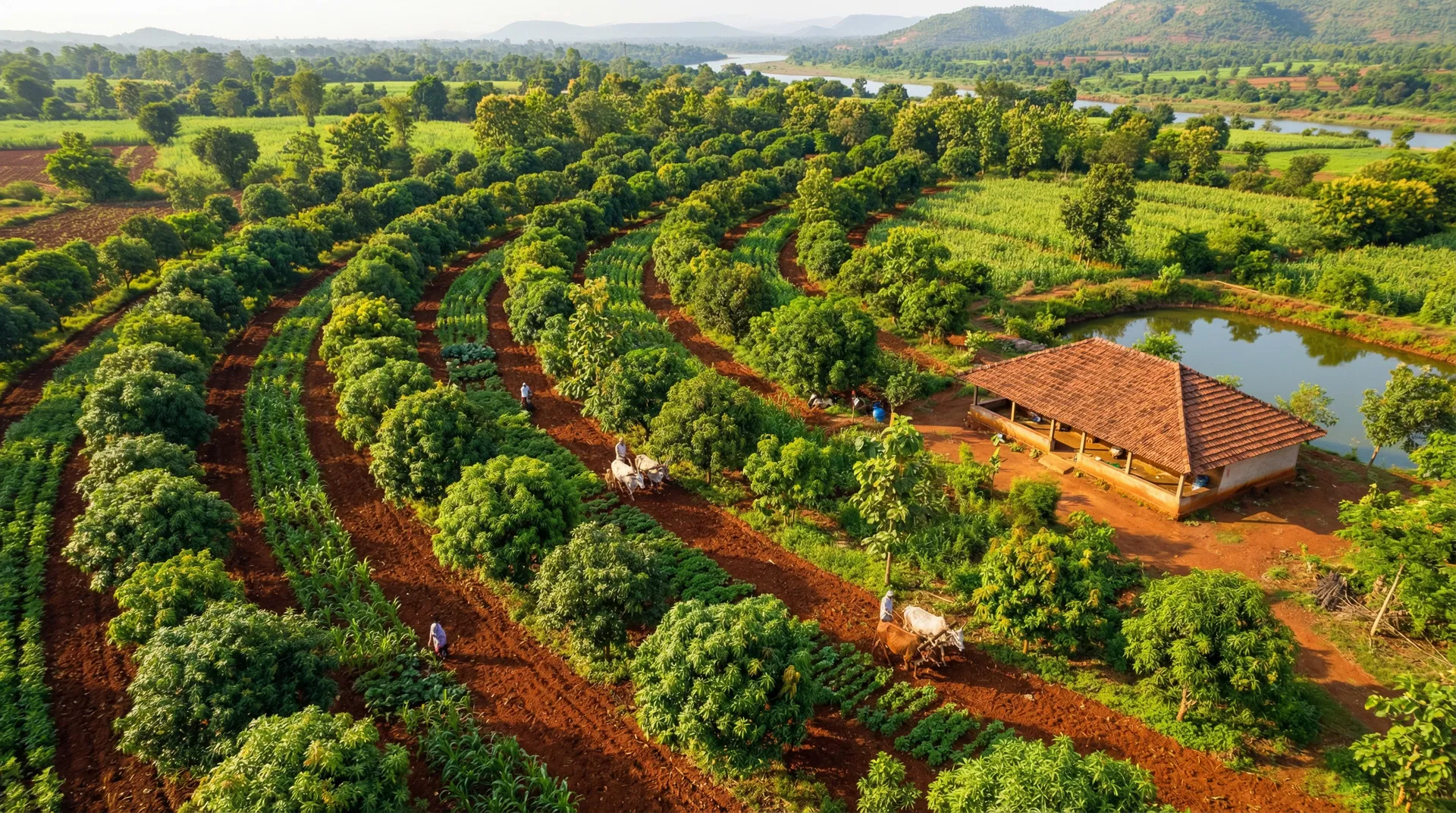
Project Aranyam is F4F's largest agroforestry initiative to date. Spanning 9 districts across Marathwada, it aims to plant 6.5 million fruit and native trees across 10,000 hectares by 2028, working directly with thousands of smallholder families. The project is registered under the Verra Carbon Standard (VM0047) with an expected 4.14 million tonnes of CO₂e removed over 30 years — but the primary measure of success is farmer income and ecosystem recovery.
The Challenge
Marathwada's farmers face compounding crises: land degradation from decades of chemical-intensive monoculture, erratic monsoons, collapsing commodity prices, and a near-total absence of income diversification. Soil organic matter is critically low, groundwater is depleted, and the region's agricultural workforce is ageing rapidly.
Our Intervention
F4F works with farmers to transition degraded plots to productive agroforestry systems using a mix of high-value fruit species (mango, lemon, custard apple, jamun, orange, sweet lime) alongside nitrogen-fixing and native species. Each farm is GIS-mapped and soil-tested before planting. Drone and satellite monitoring, powered by F4F's in-house AI tools, tracks every tree from sapling to canopy — providing the rigorous MRV that carbon and impact investors require.
How We Work
Farmer Identification & GIS Mapping
Field teams identify farmers facing land degradation and declining yields. Each plot is GPS-tagged, GIS-mapped, and soil-tested to design the right species mix and planting density for that specific land.
Agroforestry Planting & Establishment
Farmers receive saplings of high-value fruit species (mango, lemon, custard apple, jamun, orange, sweet lime) alongside native species. F4F provides planting support, organic inputs, and drip irrigation guidance during the critical establishment phase.
AI-Powered Monitoring (MRV)
Because young saplings are invisible to satellite imagery, F4F deploys drones with AI tree-detection algorithms to count, measure, and assess every tree — even at 3 feet in height. As trees mature, satellite data takes over, providing continuous, cost-efficient monitoring at scale.
Market Linkages & Value Addition
F4F connects farmers to buyers for honey, moringa powder, mangoes, and lemons — procured at 20% above market rates. GPS-tagged plots enable traceable, geo-stamped procurement. Traceability QR codes on packaging link consumers directly to the farm.
Community Voice
"My cotton fields gave me nothing but debt. Now I have mango and lemon trees coming up, and F4F tells me in a few years I will earn more than I ever did from cotton. For the first time, I am not afraid of the monsoon."
Ramesh Jadhav
Farmer, Beed district, Maharashtra
Biodiversity & Ecology
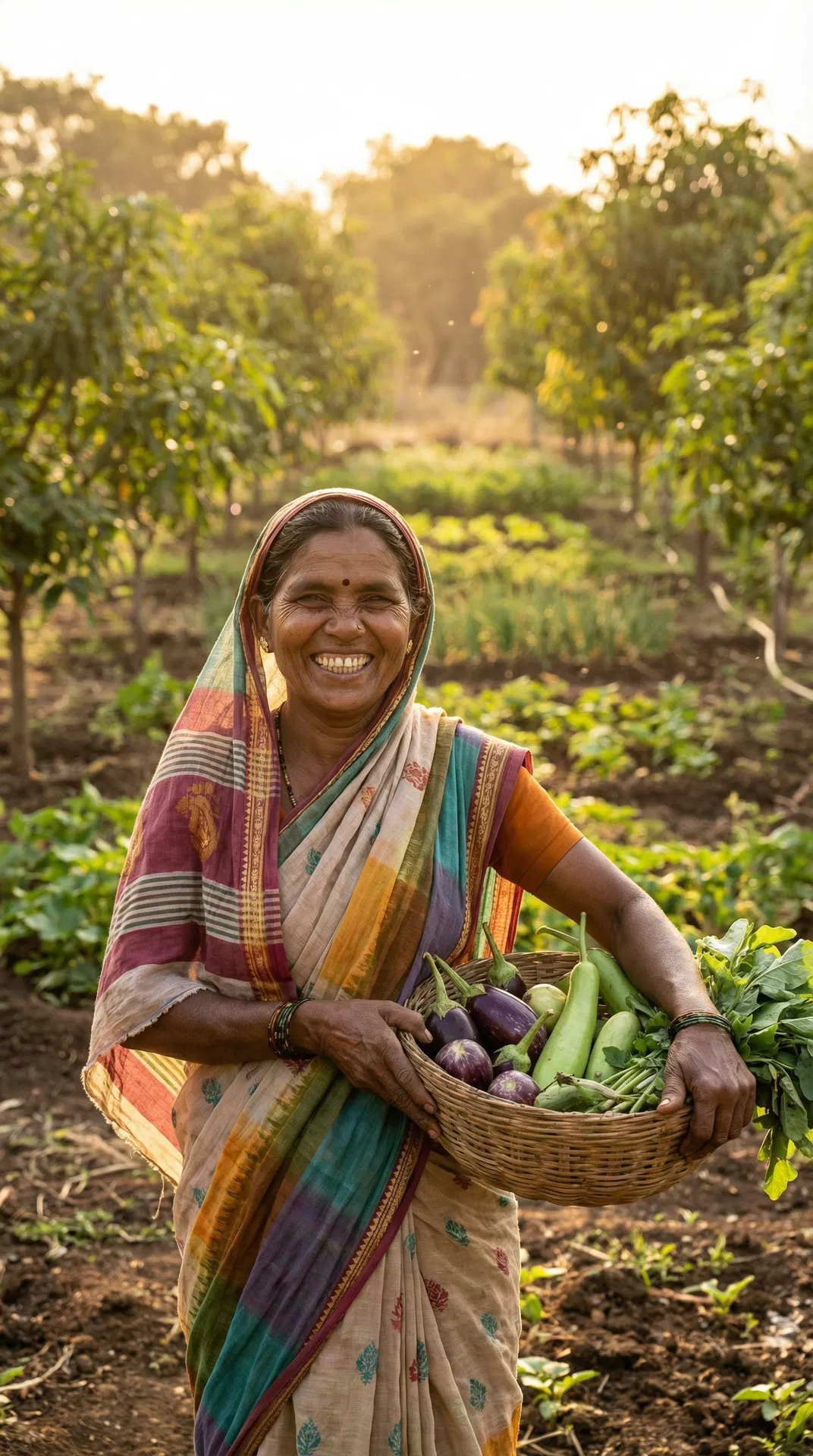
The shift from monoculture to mixed agroforestry dramatically increases on-farm biodiversity. The multi-layered canopy structure — fruit trees, shrubs, ground cover — creates habitat for birds, pollinators, and soil organisms. Nitrogen-fixing species improve soil health, reducing the need for chemical inputs and allowing native flora to re-establish in field margins and bunds.
Key Species in the Project Area
Supporting Partners
- Verra (Carbon Standard)
- Impact Investors
- CSR Partners